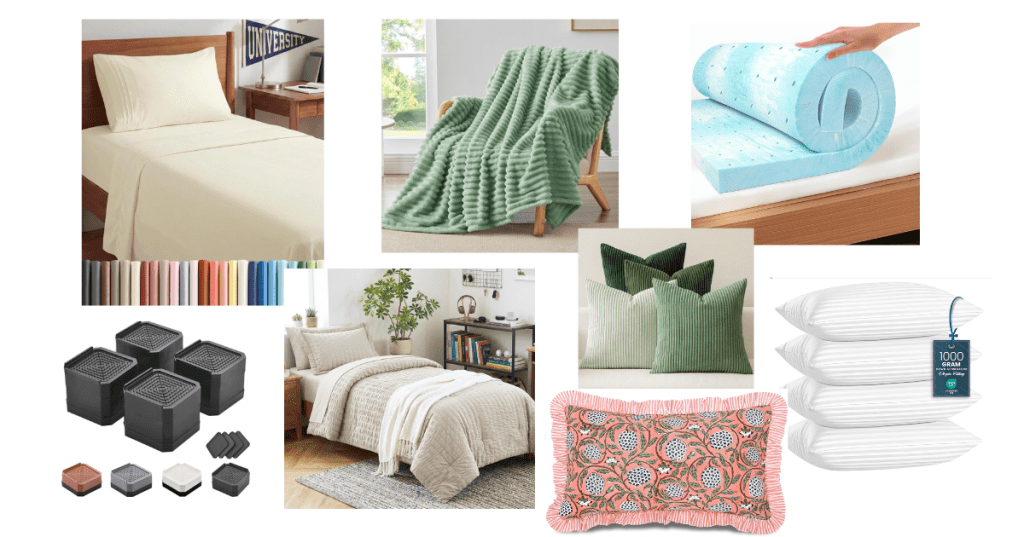
Dorm beds are Twin XL, which is five inches longer than a standard twin. Regular twin sheets don’t fit. The fitted sheet pulls off the corners every time they move at night, which means they wake up sleeping on the bare mattress by morning. Don’t make that mistake. Everything you buy needs to specifically say Twin XL.
Start with two sheet sets so they can wash one and still have something to sleep on. Washing sheets in a shared laundry room takes planning, and students don’t always plan well. Having a backup set means dirty sheets don’t sit on the bed for two extra weeks because laundry day got postponed again.
Look for deep pocket fitted sheets. Most dorm mattresses are eight to ten inches thick, especially if they add a mattress topper. Fitted sheets designed for six-inch mattresses pop off constantly. Check the product specs and make sure it says at least eight-inch pockets, preferably ten or twelve to be safe.
Cotton breathes better if the dorm runs hot, which many do because old buildings have terrible climate control. Microfiber resists wrinkles and feels soft but traps more heat. Either works fine, it’s about personal preference and room temperature. If the student sweats at night or the building has no AC, go with cotton. If wrinkles bother them and the room stays cool, microfiber is easier.
Buy a waterproof mattress protector before anything else touches that mattress. Dorm mattresses have been used by dozens of students before yours. A waterproof barrier protects against spills, sweat, and whatever else happened before your student moved in. It also keeps the rest of their bedding lasting longer because the mattress isn’t absorbing moisture and smells. Get one that’s machine washable and has deep pockets to match the sheets.
Most dorms are either too hot or too cold, never comfortable, and students can’t control the thermostat. Layered bedding works better than one heavy comforter. A lightweight comforter or duvet plus a fleece blanket or throw lets them adjust based on the room temperature that night and whether the ancient HVAC system is working. They can kick off the top layer when it’s warm and pile both on when it’s freezing.
The comforter should be machine washable. Dorms are dirty environments. Spills happen, someone sits on the bed in street clothes, dust accumulates. If it requires dry cleaning, it won’t get cleaned. Make sure the whole thing fits in a standard dorm washing machine, which is usually smaller than home machines.
Pillows are personal, but bring at least one good sleeping pillow and maybe one extra for sitting up in bed while studying or watching something on their laptop. Skip decorative pillows. They look nice in the catalog but in real life students throw them on the floor day one and they stay there until move-out. Every bit of floor space matters in a dorm room, and decorative pillows just become obstacles.
A mattress topper makes a dramatic difference in sleep quality. Dorm mattresses are thin, old, and uncomfortable. A two or three-inch memory foam or foam topper adds cushioning and makes the bed actually feel like a bed instead of a gym mat with fabric over it. This is one of those things students don’t realize they need until they sleep on someone else’s improved bed and notice the difference. Get one that comes compressed in a box because it’s easier to transport and carry up narrow dorm stairwells.
If the dorm allows bed risers, they’re worth using. Raising the bed six to eight inches creates storage space underneath for bins, a mini fridge, or extra shoes. More vertical space means less floor clutter. Make sure any risers you buy are rated for the student’s weight plus the bed frame weight, and check dorm rules because some schools ban them for safety reasons.
Twin XL bed skirts or dust ruffles only matter if the student cares about aesthetics or wants to hide the storage mess under their raised bed. Functionally they do nothing except make the room look slightly more finished. If your student isn’t bothered by seeing plastic bins under the bed, skip it and save the money and hassle.
Stick to simple, durable, machine-washable everything. Dorm life is rough on bedding. It gets washed frequently in aggressive industrial machines, it gets dragged on and off the bed by exhausted students who don’t care about being gentle, and it lives in a dusty, high-traffic environment. Delicate fabrics and complicated care instructions guarantee the bedding either gets ruined or never gets washed. Prioritize function over aesthetics.
Quick Reference: Recommended Bedding Products
| Item | Description | Price Range |
| 2 Sets of Twin XL Sheet | Deep pockets, cotton or microfiber, machine washable | $25–$50 each |
| Waterproof Mattress Protector | Twin XL, machine washable, protects against spills and wear | $20–$40 |
| Lightweight Comforter | Twin XL, machine washable, layerable for temperature control | $40–$80 |
| Fleece Throw Blanket | Extra warmth layer, easy to wash, compact | $15–$30 |
| Memory Foam Mattress Topper | Twin XL, adds cushioning, comes compressed for easy transport | $50–$100 |
| 2 Bed Pillows | Medium firmness, machine washable, good support | $20–$40 each |
| Bed Risers if allowed | Raises bed 6–8″, creates under-bed storage, weight-rated | $15–$30 |